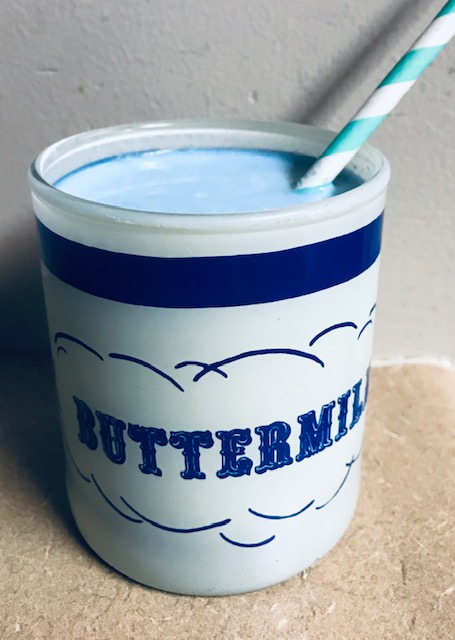
My official life career is over and done, in the rearview mirror. I am a retiree, specifically, a retired middle school principal. It’s funny how I began my career as a teacher, but retired from that trajectory as a principal. I never wanted to be a principal but I always wanted to be a teacher. Of course, it could be argued that good principals must first be good teachers but I’m not sure I could argue that good teachers make good principals. Good teachers will always be good teachers. Good principals have a lot to learn about issues and events that seemingly have nothing to do with teaching. Good principals are expected to lead in many ways, with only a few of those ways being instructional.
I first became aware of my need to teach when I was about five or six. I’d been to school and had become infatuated with the whole affair. I loved my teachers, I loved the treasures in the classroom, and I loved the school day. I was in awe of a place that I could go for a whole day to read and be read to, to play, to sing, to color, and to discover more and more about people and a world outside of my home and community. To me, teaching and learning were pure bliss.
Years later, when I became a licensed professional teacher, I continued to feel that bliss. I taught students with specific learning needs and I felt that I had a strong ability to task-analyze and teach skills in many content areas. I still thought of school as an almost magical place where words and numbers and places came to life for students and teachers as they learned and grew together.
I’m not sure exactly why I made the decision to leave the classroom after fourteen years of teaching, but it’s possible I believed then that a good teacher would be a good administrator. I initially served as a special education coordinator, working to ensure programming for students with special needs. In a short amount of time, the bliss I felt as a teacher was replaced by sheer panic as I grappled every day with the enormity of the task. That panic multiplied tenfold when after only a few years, I accepted the position of building principal and my experiences in the classroom slipped further and further behind me.
My role no longer depended largely on what I could teach; now, it was imperative that I continue to learn. I had to learn about managing people, resources, and time. I had to learn about budgets and funding. I had to learn about conflict resolution and proactive communication I had to learn how to appropriately celebrate the good but also how to take responsibility for the bad. In short, I had to learn to be a leader and my years of classroom teaching had done little to prepare me for the complexities of leadership.
As a beginning principal, I sought out many learning opportunities to develop leadership skills. At one particular weeklong training program, I was one of about 20 new school principals who, like me, wanted to strengthen their abilities to lead their school communities with confidence. During one particular exercise, we were challenged to step up as leaders while bringing undesirable news and demands to our people.
Our training instructor arranged us in a circle and asked for two of us to volunteer for the exercise. He asked for one volunteer who loved buttermilk and a few hands went up He asked for another volunteer who disliked buttermilk and I was chosen from the many whose hands were raised. The two of us—Buttermilk Advocate and Buttermilk Resister– were then told we had to convince others to drink the buttermilk. The point of the exercise was to illustrate the relative ease of the Advocate in getting his people to drink the buttermilk in contrast to the job of the Resister, who didn’t like buttermilk but still had to convince others that they should drink it. It was expected that the entire group would ultimately agree to taste the buttermilk.
As the Resister, I remember muddling through somehow, maybe persuading a person or two to at least try the buttermilk and that even though I didn’t like it, I would go first. In my naiveté, I may have even dared to tell them that if they didn’t like it, they would never have to do it again. Once everyone had shared their intention to drink or not, the instructor gave us the actual buttermilk to distribute. I was handed a clear plastic pitcher of buttermilk—or was it?—that had been dyed bright blue and was told to pour a taste for each of my people who agreed to drink it.
I panicked, much like I sometimes did at school. My thoughts were racing and everyone was watching me. I had promised them buttermilk and I had somehow convinced them that even though it was distasteful, I would lead them to a drink they could swallow! No one said the buttermilk would be blue! I didn’t even know if this was buttermilk! I didn’t know if it was healthy to drink blue buttermilk! I was no longer willing to drink it myself, so how was I going to ask my people to drink it?
Unsure of my next step, I decided to just say the truth. I admitted that I was unaware until that moment the buttermilk would be blue, but I felt we could work together to come up with a way to ingest it. While we previously thought we knew what we’d be drinking, now we were unsure. So, we could decide next steps together: those who could identify the buttermilk would do so, then perhaps someone could develop other ways to taste it. Members of the team suggested using the blue buttermilk in ways that would be easier to swallow: blue buttermilk pancakes, muffins, and smoothies. Others suggested that they could drink it anyway and perhaps stand in for someone who could not. Others were excited and intrigued enough to try it on the outside chance they might like it or learn something about it. One team member suggested that after drinking, the team should determine whether it was beneficial and how this situation or a similar one might be faced next time.
A set of behaviors began to emerge that taught me some important concepts in leadership: be ready, ask questions, identify the problem, make a plan, execute, and then assess your plan for future planning and collaborate whenever possible so that the best people are where they are needed most. However, I believe that the most important lesson learned was to be truthful with myself and others from the onset in order to work most strongly together.
I would revisit the blue buttermilk analogy many times over my twenty years in leadership. I shared the exercise with staff and we laughed together but also knew that there would always be times when we would be served a big pitcher of blue buttermilk. We knew, that for maximum efficacy, we would employ our abilities as a team to take it in, maybe even make it into something we could enjoy or profit from in some way. We knew that sometimes I could ask, “how would you like your blue buttermilk served today?” We also knew that on rare occasions, I would need to say, “Drink your blue buttermilk.”
As humans, for the past several weeks we have faced multiple servings of blue buttermilk. Just when we think we can drink the regular buttermilk at the urging and support of our leaders, the buttermilk appears blue and there are more questions than answers. Why the change? Is this going to harm me or someone I love? How much blue buttermilk can I drink and maintain my willingness to take one for the team? Will we ever have regular buttermilk again?
Although I’m no longer in a formal position of leadership, I find myself once again in a position to learn more than I can teach. I need to learn how to keep myself and my home healthy. I need to learn how to stay connected to those I love. I need to learn how to safely plan for my future. I need to learn how to access reliable information for personal well-being. And again, I need to learn to drink the blue buttermilk and ask others to do the same, even though I don’t want to.
I am a Resister and I’m raising my glass. To our health.
 Over Yonder
I love your story and the way your on-the-spot solution showed the kind of person you are and why you were such a wonderful administrator.
LikeLiked by 1 person